
Anyone playing competitive matches knows the situation: you’re at the table, across from someone you already played six months ago. The name rings a bell. How they played, what worked and what didn’t — gone. So you start from scratch again.
TT Playbook Player is built against exactly that forgetting. The app digitises what good players do anyway: keeping records on opponents, on their own mistakes, on what worked in the last match. Only in a form that can actually be analysed afterwards. Six problems sit at the centre of it.
1. “Who was that again — and how did they play?”
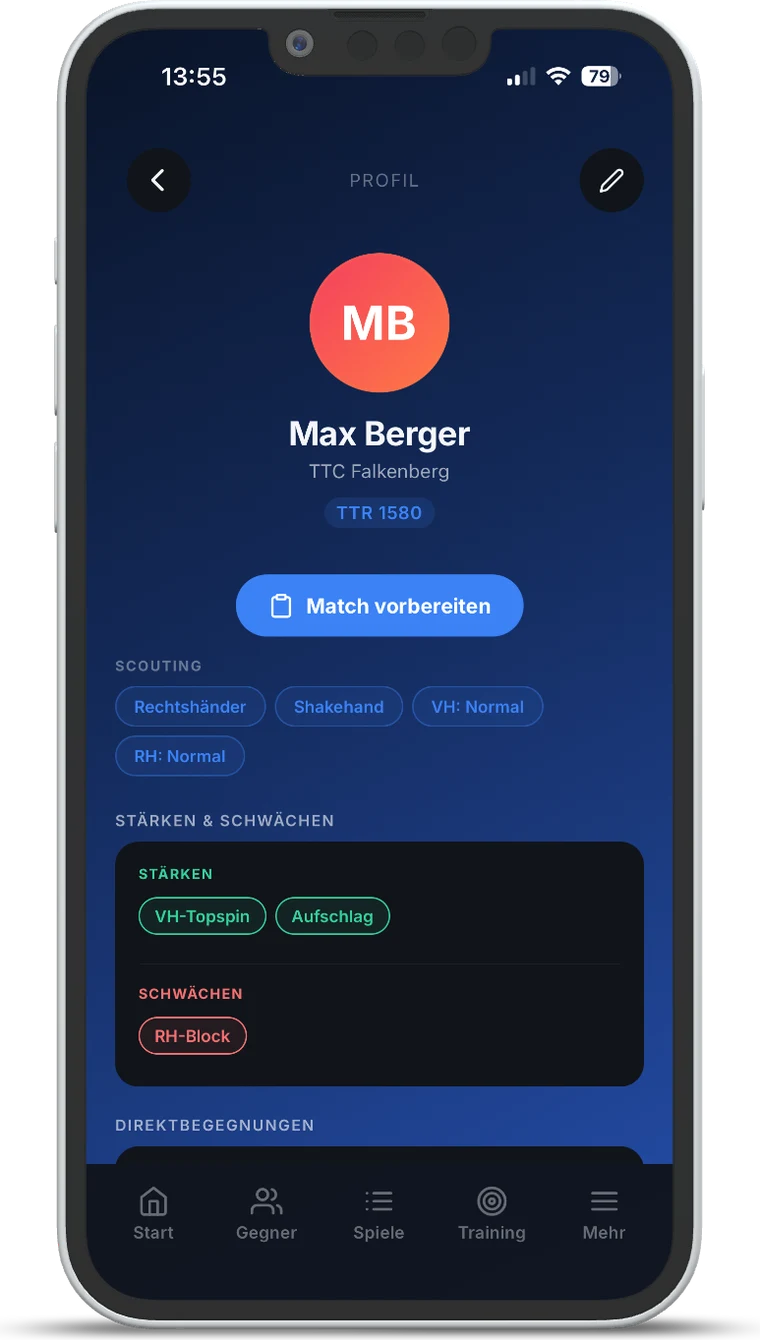
The app builds a scouting profile for every opponent. Basics like club, team, division and rating belong to it, but above all the things that matter at the table: handedness, grip and playing system — offensive, all-round, defensive, blocking, and combinations of those.
Then comes the equipment, in full: blade plus forehand and backhand rubber with type, brand, model, colour and sponge thickness. Critical rubbers are colour-flagged in the profile, so long pips and anti-spin catch your eye immediately. The profile is rounded out with strength and weakness tags and free scouting notes for everything that won’t fit into fields — serve tendencies, behaviour at close scores, preferences in the short game.
2. The pile of scribbled notes after the match
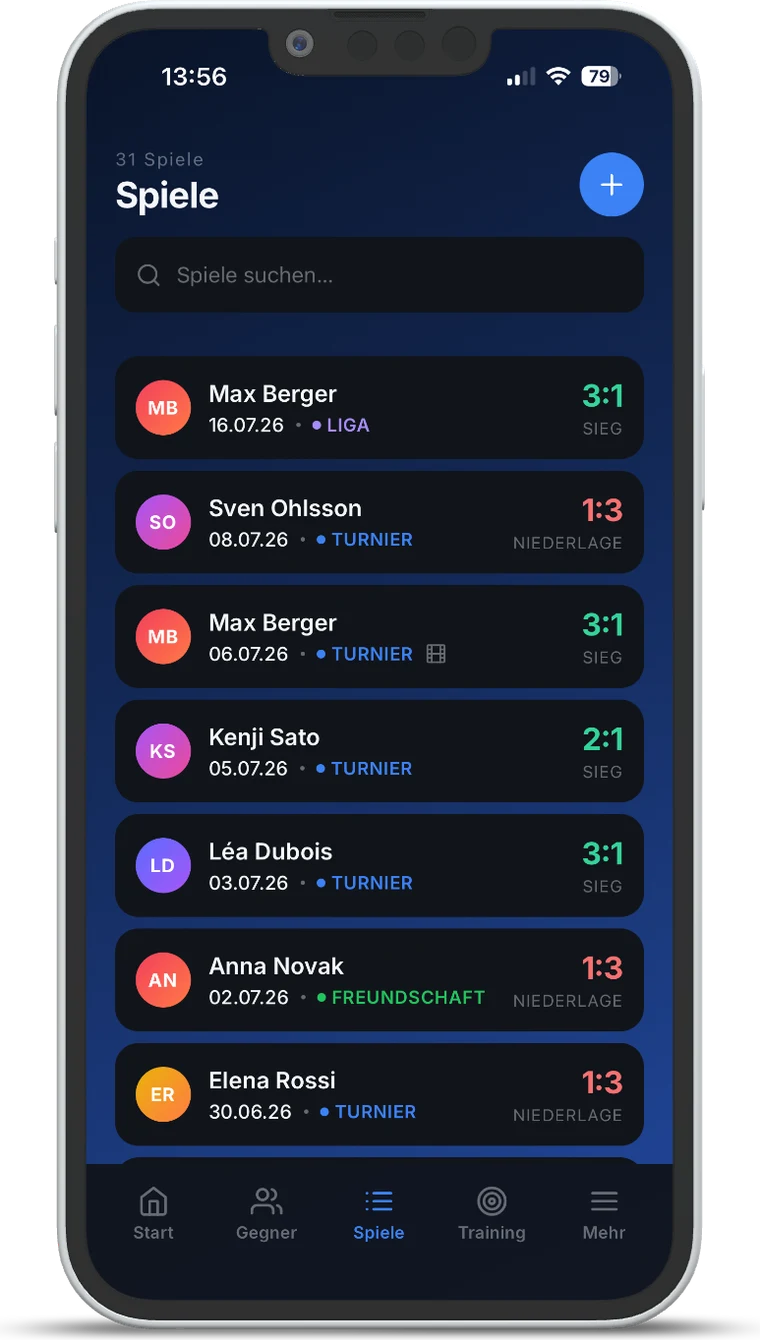
A match is set up in two steps: pick the opponent — or start without one and assign them later — then set the details. Context (tournament, league, training, friendly), match format at best of three, five or seven games, date and venue.
You enter the game scores right at the table, game by game as the final score. The app checks the rules live: a game only counts from eleven points with a two-point margin, the deuce zone is flagged separately, impossible scores trigger a warning. As soon as the first value is in, the match is saved automatically as in progress and can be resumed later. There is deliberately no point-by-point counter — typing two numbers between games is faster than tapping every rally.
After the match the observations follow: a note on the opponent, skill tags for their strengths and weaknesses, and in free form what worked in your own game and what didn’t. Those notes are precisely what later feeds the statistics, the preparation and the training recommendations.
3. Videos you never find again
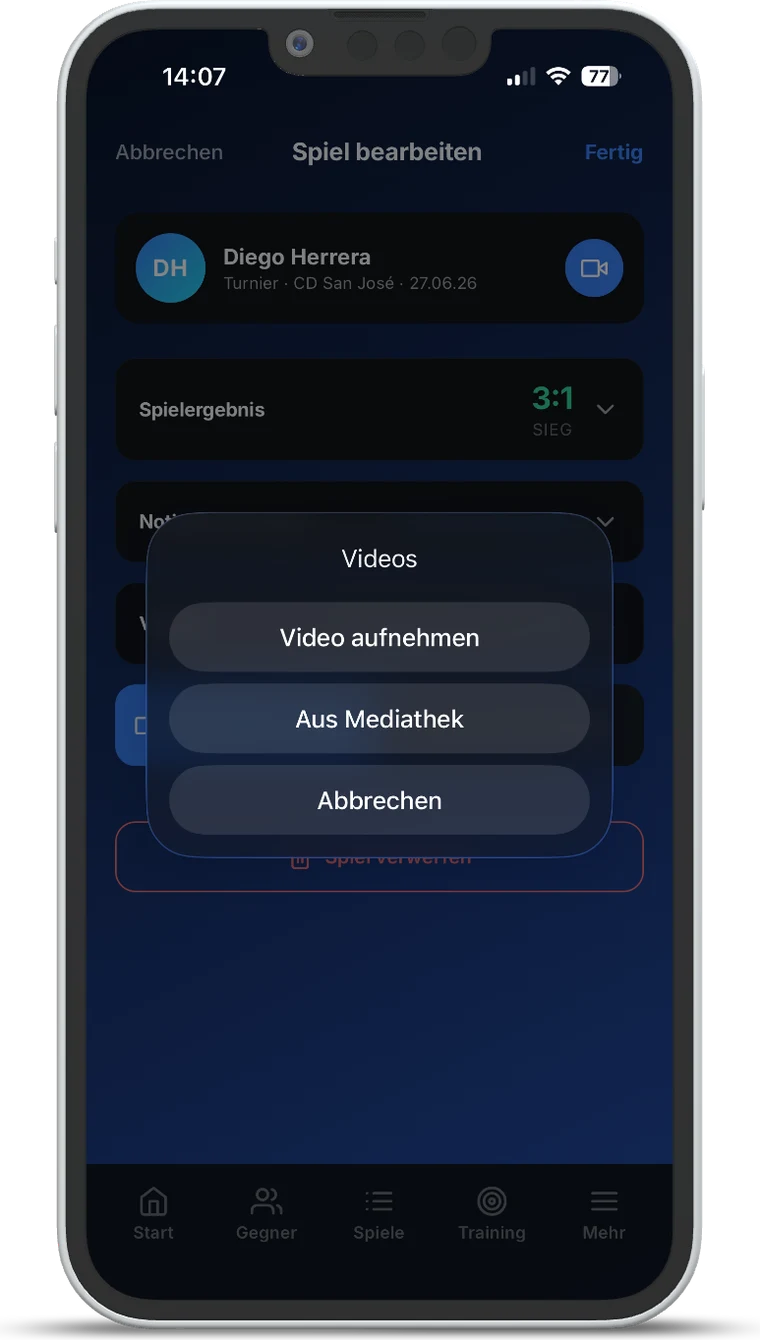
Most recordings of your own matches end up in the phone gallery between holiday photos and are never watched again. In TT Playbook Player you record straight from the match or the opponent — with zoom, camera switch and light — or import an existing clip from your library. The video then stays attached to the match it belongs to.
The built-in player is made for analysis: slow motion from 0.25× to 2×, a scrub bar, landscape mode. The files sit in an app-owned folder, not in the system gallery.
4. No overview of your own progress
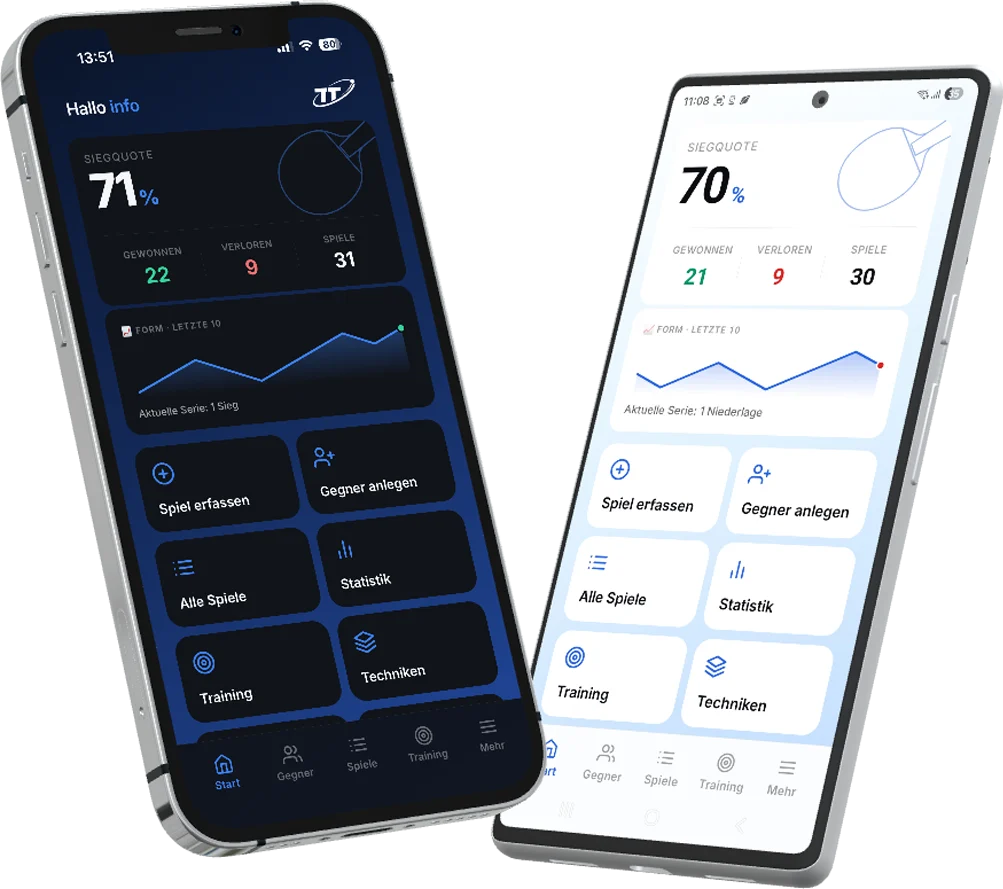
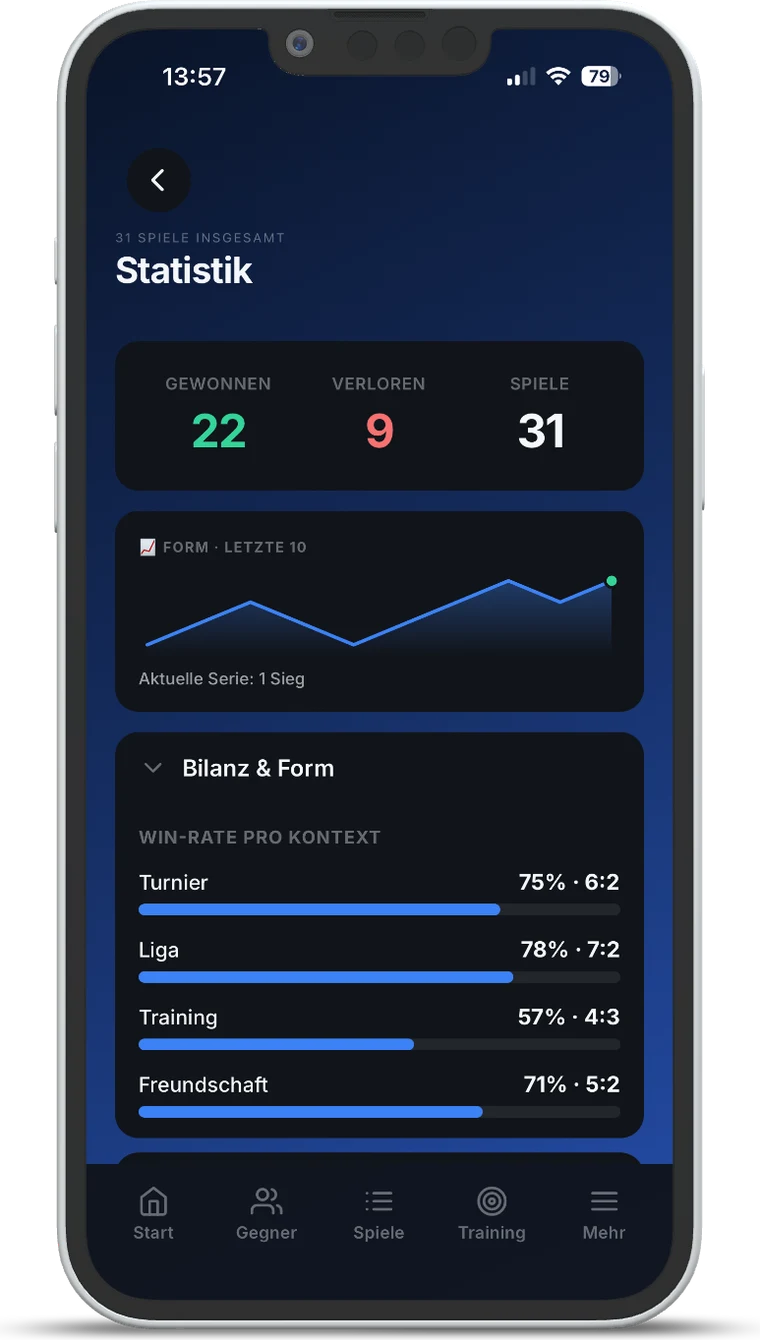
Every analysis is computed live from the matches you record; nothing needs maintaining. Free of charge you see the win rate, the games balance, the form curve of recent matches and three insight cards: current form, strongest constellation, biggest problem.
The in-depth analysis in the Pro version goes considerably further. It breaks the record down by context, shows game win rates, average points per game and how things go specifically in close games. It names your best and worst match-ups, sets your own problem areas against your most effective shots, and analyses by opponent type — left-handers versus right-handers, by playing system, by equipment. That last one is where many players see in black and white for the first time what they had suspected: that something systematically goes wrong against one particular type of player.
5. Digging out everything before the match
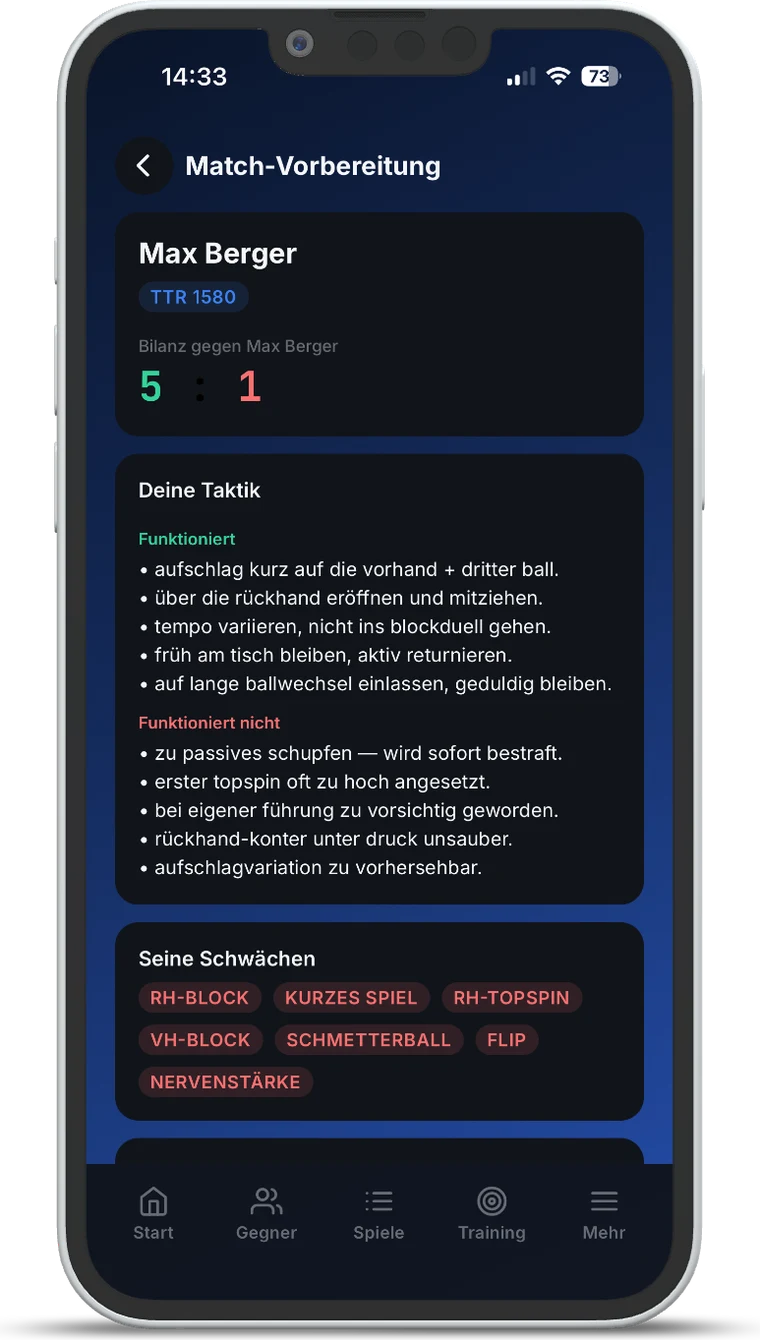
If you want to walk to the table prepared, you usually leaf through old notes shortly before the match. The pre-match briefing in the Pro version takes that over: it automatically bundles everything already on file for this opponent — the head-to-head record, what has and hasn’t worked against them, their known weaknesses, the scouting notes and the recent matches.
Nothing extra needs recording for it. The briefing is a different view of data that is already in the app — reachable from the opponent profile or directly when setting up the match.
6. Not knowing what to work on
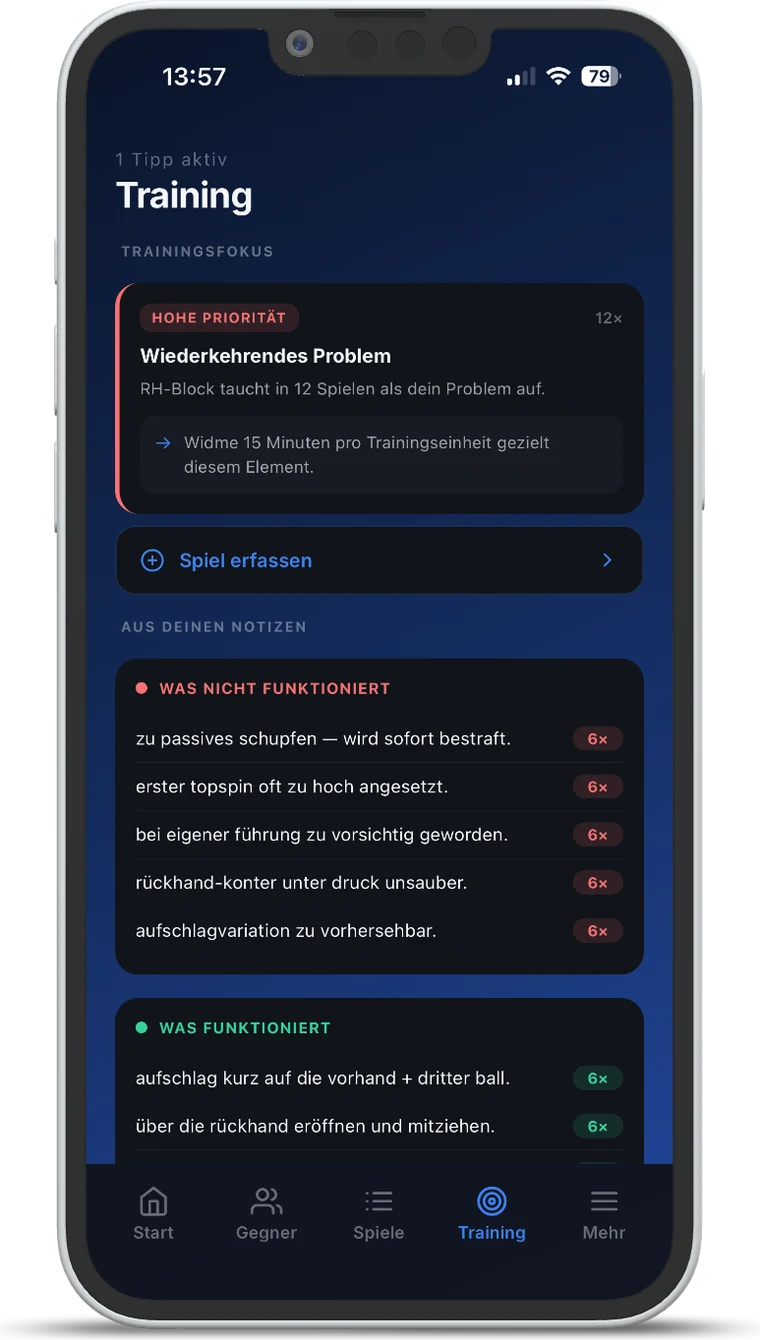
The most common answer to what you should work on in training is a gut feeling. TT Playbook Player instead derives concrete recommendations from your recorded matches, sorted by urgency: close games are being lost, something isn’t right against left-handers, one particular technical problem keeps coming up, the game win rate is below half, there’s no answer to defenders. Each finding comes with a suggested drill.
Alongside that, the app aggregates the free-text notes from all your matches into two lists — what works and what doesn’t — each with a frequency count. Useful recommendations need roughly three to five recorded matches. The training area is not behind Pro.
Who the app is built for
In short: for club and tournament players who regularly face changing opponents and don’t write off defeats as bad luck. If you play once a month to unwind, you won’t need it — without recurring opponents there’s no body of data to read patterns from. There’s a separate post covering that in more depth: Who TT Playbook is built for — and what sets it apart from other table tennis apps.
One limitation belongs here: singles are what you record right now. Doubles is in preparation, but not yet enabled.
What does TT Playbook Player cost?
The Starter version is free and usable indefinitely. It allows 20 opponent profiles and 100 matches, plus notes, skill tags, video recording, the basic statistics and the “Record & form” analysis — enough to find out across a full half-season whether the approach suits your game. The demo data that ships with the app does not count towards the limit.
Pro removes both limits and unlocks the four additional statistics sections, match preparation and the opponent profile sheet. It costs €4.90 per month or €39 per year. Billing runs through the App Store or Google Play, where a subscription can also be cancelled.
Availability and privacy
The app is available for iOS and Android, in German, English and Spanish, in either a light or dark appearance.
On data we made a deliberate choice: the app is offline-first. Matches, opponent profiles and notes stay on the device and are not passed on to third parties; videos live in an app-owned folder. That isn’t a side note — anyone keeping records on opponents is collecting notes about people from their own association.
Conclusion
TT Playbook Player doesn’t reinvent anything. Observing opponents, reviewing matches, preparing properly — good players have always done that, mostly on scraps of paper and in phone notes. What’s new is that this work no longer gets lost but connects up: forty game scores, notes and opponent profiles turn into a statement about what you should be working on.
Know your opponent before the first serve.